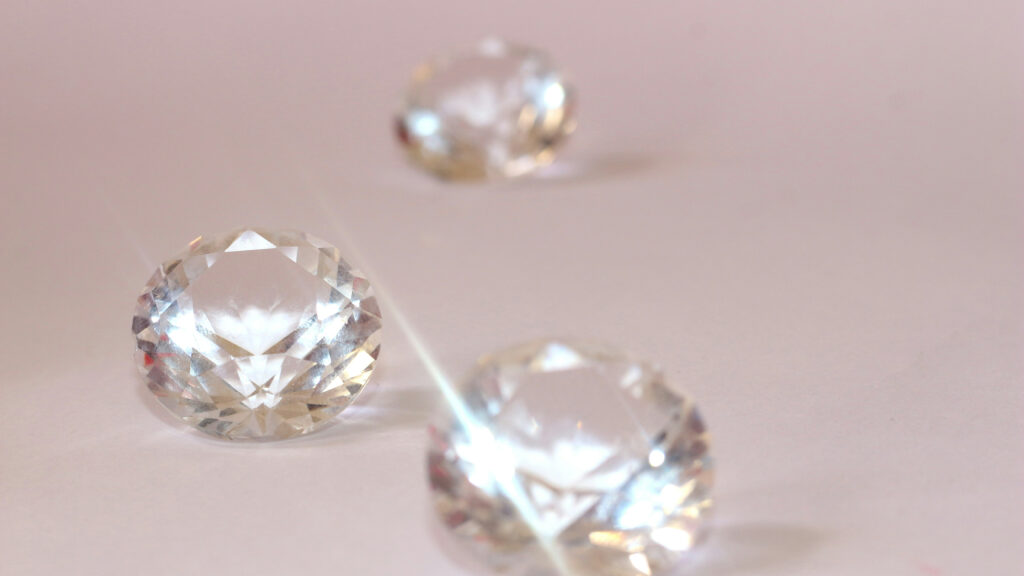

When shopping for a diamond, whether it’s for an engagement ring, a special gift, or a treat for yourself, you’ll quickly encounter a term that sounds technical and intimidating: The 4 Cs of Diamonds. This grading system stands for Cut, Colour, Clarity and Carat, and it’s the universal way to evaluate a diamond’s quality and value. But don’t worry, ‘The 4 Cs of Diamonds Explained Simply” is exactly what we’re doing here. We’re breaking it down and including our top tips so that you can shop with confidence and clarity. Let’s dive in!
The 4 Cs of Diamonds Explained Simply
1. Cut
Cut is arguably the most important of the 4 Cs because it’s what gives a diamond its sparkle and life. Contrary to what many people think, cut doesn’t refer to a diamond’s shape, but rather to how well the diamond has been faceted and proportioned. A well-cut diamond reflects and refracts light in a way that creates brilliance. Cut is graded from Excellent to Poor based on factors like depth, symmetry, and polish, and even a smaller or lower-colour diamond with an excellent cut can outshine a larger, more flawless one if it’s poorly cut.
Top Tip: If you’re prioritising wow-factor, go for an excellent or ideal cut. It’s the most important C when it comes to visual impact.

2. Colour
When it comes to traditional white diamonds, colour actually means lack of colour. The most valuable diamonds are colourless and are graded from D, completely colourless, to Z, with a noticeable yellow or brown tint. Most people can’t tell the difference between a D and H with the naked eye, which is great news if you’re on a budget. It’s also important to consider how your diamond will be set. For example, if you’re choosing a yellow or rose gold setting, you can go lower on the colour scale (like J or K). On the other hand, white gold or platinum settings tend to highlight any yellow tones, so sticking to a higher colour grade may be a better choice in those cases.
Top Tip: Grades G to I are a smart middle ground. They look colourless, but cost significantly less than higher grades.

3. Clarity
Clarity refers to the small imperfections that naturally occur inside a diamond (called inclusions) or on its surface (called blemishes). These marks are usually the result of the diamond’s formation deep within the earth, and they make each stone unique. The clarity scale ranges from Flawless (FL)—with no visible imperfections even under 10x magnification—to Included (I1–I3), where flaws can be seen more easily, even with the naked eye. Most inclusions are so small they can only be detected under magnification and don’t affect how the diamond looks when worn.
Top Tip: Look for VS1, VS2, SI1 or SI2 clarity grades, as they strike a great balance between appearance and price. More often than not, you’ll find beautiful stones without paying a premium for perfection; it’s a win-win situation.

4. Carat
Carat refers to a diamond’s weight, not just its size. One carat equals 200 milligrams, and even a small difference in carat weight can have a noticeable impact on price. That’s because larger diamonds are rarer, making them more valuable. But here’s the catch: a heavier diamond doesn’t always look bigger or better. A poorly cut 1-carat diamond can appear smaller and duller than a well-cut 0.90-carat stone that’s been expertly shaped to reflect light beautifully.
Top Tip: Don’t get too fixated on the number. Instead, focus on how the diamond looks when it’s worn. A slightly smaller stone with excellent cut, colour, and clarity can outshine a larger one that compromises on quality.
Final Thoughts
Understanding the 4 Cs helps you decide what matters most for both your budget and style. Want a sparkly, show-stopping stone? Prioritise cut. Want size without spending a fortune? Explore a carat with lower clarity or colour. The key is balance. Because the best diamond isn’t the most expensive one, it’s the one that fits your priorities.
Now that you know the 4 Cs of diamonds, you’re equipped to make a smart, confident choice. Whether you’re buying your first piece of jewellery or helping someone pick their dream ring, remember: a little knowledge goes a long way.
Need help finding the diamond that’s right for you? Check out our guide, “Engagement Ring Shapes: The Ultimate Guide,” and schedule a consultation with our expert team today!